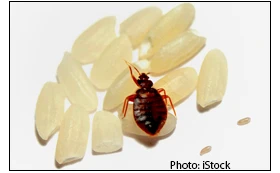
Rutgers’ Changlu Wang and his research team have been studying the effectiveness of products such as mothballs and rubbing alcohol, and Wang reported on these findings at this month’s Entomology 2013, the Washington Post reports.
Spraying a group of bed bugs with rubbing alcohol left about half alive four days later, Wang reported. His research team at Rutgers University also found that mothballs failed to wipe out bed bugs after 17 days in a plastic bag full of infested clothes. Eggs and immature bedbugs survived the mothball treatment well, and only 44 to 60 percent of the adult males died.
The article also noted that a commercial blend of essential oils turned out to have a major drawback under likely real-world conditions. In a lab where bugs had no chance to bite anybody, treatment with the product Bed Bug Fix had killed 92 percent of bugs by the end of two weeks. But when researchers sprayed bugs and then allowed them to feed, as they might in a home, the insects survived. Just why isn’t clear, Wang says. Ultrasonic bedbug-repelling devices are popular, but they don’t work, Wang said. In a survey of 24 places infested with bedbugs, seven had an ultrasonic repeller.
Click here to read the entire article.
Source: Washington Post
Latest from Pest Control Technology
- Earn CEUs at Next Week's Mosquito Control Virtual Conference
- Coast Releases Report on Fuel Spend
- WPCA Hosts Midwest Pest Con
- Google Ads Mistakes That Cost PCOs Thousands
- Zach DeVries Details his Cockroach Research, Importance of UK Short Course
- Sprague Strengthens California Leadership Through New Appointments
- PestInsight Empowering Youth in Africa and Beyond Through Education
- Guest Editorial: Making Safety the Standard on Every Service Call


