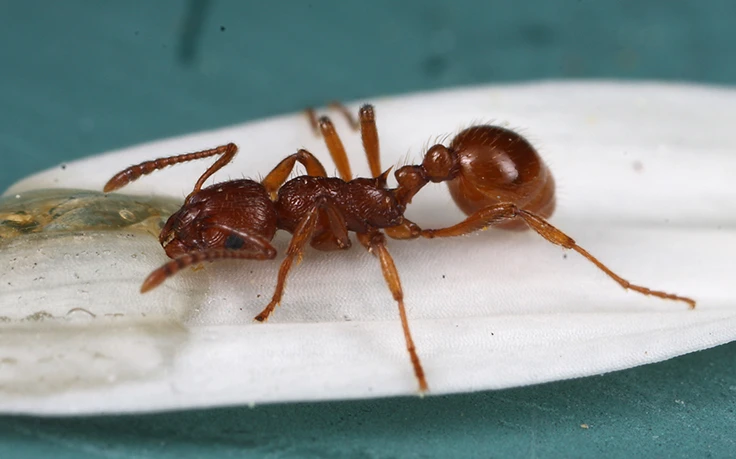
University of Maine researchers are one step closer to controlling the ever-growing invasive fire ant populations, Myrmica rubra, that have been spreading throughout Maine for the last 15 years, Phys.org reports.
Due to the highly competitive and aggressive behavior of these fire ants, eradication has proven to be almost impossible. UMaine researchers are turning their attention to a different kind of control to try and combat these tiny stinging insects. Their weapon—pathogenic fungi.
"We are attempting to try and grow this newly discovered fungi in the lab in order to look at its utility for management of the ants, but it may be too difficult to reproduce which would hamper its development as a biological control mechanism. We aren't convinced, but we are looking into it," said Eleanor Groden, UMaine professor of biological sciences. "It has some potential."
By encouraging the growth of the pathogenic fungi, these researchers hope to scale down the populations of invasive fire ants, which will alleviate Maine residences from the painful stings the tiny insects administer.
Click here to read the entire article.
Source: Phys.org
Latest from Pest Control Technology
- Donny Oswalt Shares What Makes Termites a 'Tricky' Pest
- Study Finds Fecal Tests Can Reveal Active Termite Infestations
- Peachtree Pest Control Partners with Local Nonprofits to Fight Food Insecurity
- Allergy Technologies, PHA Expand ATAHC Complete Program to Protect 8,500 Homes
- Housecall Pro Hosts '25 Winter Summit Featuring Mike Rowe
- Advanced Education
- Spotted Lanternflies, BMSBs Most Problematic Invasive Pests, Poll Finds
- Ecolab Acquires Guardian Pest Solutions


